Friday, April 8, 2016

Join us at Cooking Vacations for our Lemon Lifestyle Cooking With Lemons on the Amalfi Coast and learn how!

Delizia Al Limone ~ Lemon Delight
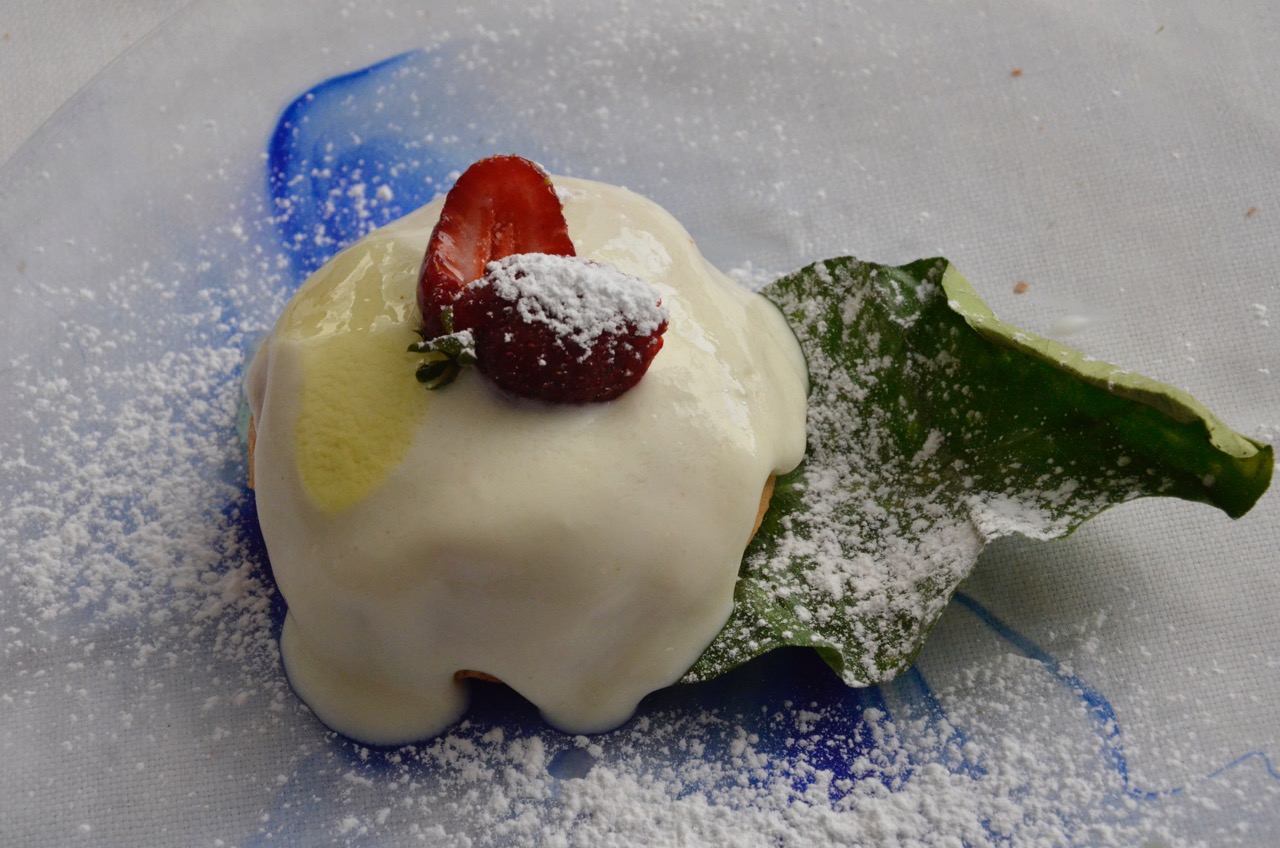
 

Serves 10 to 12

Pan di Spagna ~ Sponge Cake:
4 Eggs (at room temperature)
120 g Sugar
150 g ‘00’ Flour
Pinch of Salt
1 tsp Vanilla (powdered or liquid) or Lemon Zest
Butter & Flour for the Pan Crema Pasticciera ~ Pastry Cream:
4 Egg Yolks
150 g Sugar
50 g Flour
½ L Whole Milk
Lemon Liquor/Limoncello
Crema Chantilly ~ Chantilly Cream
400 g Pastry Cream
400 g Whipped Cream

Simple Syrup:
1 Liter Water
½ Liter of Sugar
Lemon Liquor

First prepare the sponge cake. Whip eggs with sugar (if the eggs are cold, place in warm water for a few minutes prior to cracking into the sugar) until light and fluffy. Sift flour and salt into the egg mixture, one spoonful at a time, mixing between each addition. Add vanilla or lemon zest and blend well. Pour mixture into a round buttered & floured baking pan (24-cm or about 9 1/2-inch) and bake in a preheated oven at 360°F (180°C) for 20 to 25 minutes until golden.
Next prepare the pastry cream. In a bowl, mix egg yolks with 100 grams of sugar. Slowly add in flour and blend. In a separate pot, heat milk with 50 grams of sugar (lemon zest, chocolate, vanilla beans, coffee beans all optional depending on the flavor that you would like the cream to have). Once the milk comes just to a boil, remove from heat and add to the egg-sugar-flour mixture. Cook over low heat for another 2-3 minutes until the cream has thickened and starts to bubble. Remove from heat, add a splash of Limoncello, cover with plastic wrap to prevent skin from forming and allow mixture to cool completely before using (2-3 hours).
Prepare the simple syrup by mixing the water, sugar and a splash of Lemon Liquor in a large saucepan. Heat over medium until the sugar is fully dissolved and the water just starts to boil. Remove from heat and allow to cool completely.
After the pastry cream is cooled completely, fold 400g of the pastry cream with 400g of whipped cream to make your Chantilly Cream. (You will have some pastry cream left over, which is a great dessert on its own, served with crumbled cookies or fresh berries on top).
To assemble, cut sponge cake in half horizontally. Spoon or drizzle the simple syrup onto the first layer of the sponge cake to moisten. Spoon the Chantilly cream on to the lower half of the sponge cake. Place top piece of sponge cake back on top to cover and spoon the simple syrup to moisten the top layer as well. Top this with the rest of the Chantilly cream. Chill in the refrigerator until ready to serve.

Wednesday, March 2, 2016

Heaven In Conca Marini ~ First created in a monastery along the Amalfi Coast, a delicate pastry lives on.


Sfogliatella

First created in a monastery along the Amalfi Coast, the delicate pastry lives on

Sfogliatella, probably one of the hardest words in Italian to say, is the easiest word to fall in love with. Meaning many small, thin layers, it refers to a traditional dolce consisting of delicately layered pastry filled with a cooked cream. Baked to a golden brown and garnished with cooked pastry cream and one black cherry, sfogliatelle were first created in the Monastery Santa Rosa, in Conca dei Marini, by the holy hands of a nun in the 16th century. With a lot of time on their hands, the nuns prayed and baked all day, and were known to have created the best pastries and desserts in all of Italy.
It was the reverend mother, Clotilde, who headed the kitchen at that time, and who we can thank for this delicious flaky bite. One day, while busy baking, she was said to have added semolina to hot milk and made a cream that she didn’t know what to do with. To heighten the flavor, she added dry citrus fruit and vanilla and then decided to put it between sheets of pastry dough that were brushed with lard and white wine. It was a heavenly recipe made by mistake.

In keeping to her religious order, she pushed up the top of the pastry dough, giving it the shape of a cappuccino di monaco, the hood of a monk, before popping it into the oven to bake. Once baked to a golden brown, she held it close to her nose and thought how she could increase donations with such a sweet smelling pastry. 

She wasted no time and proceeded to put a few of the pastries out in the little revolving wheel in the wall of the convent, hoping someone, anyone, would take one and leave a few coins. Within minutes, the pastries were gone and the sfogliatelle became an instant success. The reverend mother went on to bake more. The more she baked, the more coins were left—everyone liked the combi- nation of crispy, buttery layers stuffed with cooked cream and topped with a black cherry.  She dedicated the pastry to the convent
and called it La Sfogliatella Santa Rosa.

Her recipe remained a secret and was confined within the monastery walls for 150 years. Then one day, the sfogliatella appeared in a sweet shop on Via Toledo in Naples. A man by the name of Pasquale Pintauro, who happened to be the nephew of one of the Santa Rosa nuns, had gotten hold of the recipe and began making them in a revised rendition, eliminating the dome top and black cherry.  Soon sfogliatelle became popular
around the world.

The story of sfogliatelle is so fascinating that I decided to hop in my Fiat 500 and drive to the Monastery of Santa Rosa to see just how they are made. It is a 40-minute drive along the Strada Statale 163 from Positano to Conca dei Marini through a vertical land- scape where mountains surge from the sea and a horizontal road is carved into the cliffs overlooking the Tyrrhenian. The scenery is an explosion of colors—the sea tones change from emerald green to indigo blue, and  
blakets of green citrus orchards line terraces bur- geoning with lemons the color of the sun.

You’ll know you are close when you make the sharp curve after the Grotta dello Smeraldo, the green grotto. The majestic monastery appears several hundred feet above the road. Cut into a limestone cliff, it overlooks the Amalfi Coast, keeping watch like a Saracen defense tower.

Gone are the nuns in the kitchen. Monastery Santa Rosa is now a hotel, resort & spa. Executive chef Christoph Bob, a German, is now at the helm of the kitchen at Ristorante Il Refettorio, the on-site restaurant. He has taken the original recipes from this holy kitchen’s past and added his interpretation for a light and modern twist, and the sfoglia- tella is one of them. 
 
As I follow his instruction on how to make the perfect sfogliatella, he shares his story on how he landed in Italy. “I not only fell in love when I came here, I fell in love with the food. Nowhere on earth does the sun and the soil give us such richness of flavors as do the fresh produce, herbs, and seafood found right here on our coast,” he says.

After rolling and stu ng each pastry, they’re put in the oven to bake. Chef Bob then invites me to visit the original herb garden that was once cultivated by nuns. Perfectly manicured, the garden includes herbs like basil, mint, and rosemary, as well as vegetables such as eggplant, artichokes and toma- toes, and anything else in season.

“Our herb and vegetable garden is just two steps out of the kitchen and we grow the same herbs the nuns grew 300 years ago,” says Chef Bob. He leans over and picks a couple of  
zucchini from the vine.

“We use these to make local pasta and zucchini with provolone cheese. Our cuisine is traditional with classics such as puttanesca, where I use fresh tuna, which is lighter. There is saltimbocca, which is veal, prosciutto and sage, rolled up and cooked in dry white wine. I braise the veal slowly, not boiling it, so it keeps the proteins. We keep traditions and revisit them in modern way, so there is less fat,” he says.
We discuss how the nuns and monks throughout history were the ones creating the best food, medicine and liqueurs. “Dom Pérignon was the first to make Champagne in a monastery, like beer, wine and medicine, too, also born in a monastery. It’s easy to work in such a place with rich history of food, products and ingredients,” he tells me.  Chef Bob’s love a affair with Italian cuisine is displayed on every plate that comes out of the kitchen: his signature appetizer, a trio of crustaceans—lobster with chickpea puree and smoked olive oil broad bean salad; ravioli with king prawns, Corbara tomatoes and candied lemon; and fusilli pasta with calamari-amaretti, baby squid and piennolo tomatoes smothered with eggplant and basil, to name a few.

 "I'm happy to have spaghetti. I think spaghetti with tomato sed the right spaghetti, the right tomatoes—not cooked too much and not cooked too little, and not too acidy. It’s complex, not simple, and quite a challenge to make this recauce is one of the most di cult recipes to make because you neipe perfect,” he says.


 The Dominican sisters at Santa Rosa were a strong minded and devotdenomination, but they waned away in the mid-1800s, thought never to be replaced again, until the strong-minded and creative Bianca Sharma, an American, sailed by on a yacht one day and set eyes on the monastery. She eventu- ally purchased the property and worked dili- gently for the next 10 years to renovate it. She converted the former nuns’ domain into a luxury boutique hotel with 20 elegant suites, and turned their wine cantina into an elabo- rate spa.  There is also Ristorante Il Refettorio, the hotel’s award-winning restaurant.

Exotic greenery and landscaped gardens surround an infinity swimming pool that overlooks the sea, all in keeping with the original look and respecting the property’s ancient architecture.

The day Ms. Sharma, my neighbor in Posi- tano, o cially opened, I called to congratulate her. I told her I had followed her story from the first time she sailed by and during the 10 years that followed. She invited me to lunch at Santa Rosa during opening week. That was four years ago. The hotel now is ranked one of the premier luxury properties in the world.

Today, I was lucky enough to return to the kitchen to make sfogliatelle with Chef Bob. The sfogliatella are being dusted with confectioner’s sugar and everything is heavenly.


 Lauren Birmingham Piscitelli is founder and owner of Cooking Vacations Italy www.Cooking-Vacation.com  which specializes in culinary tours, hands-on cooking classes and cultural adventures in Italy. www.cooking-vacations.com; (617) 247-4112.


Wednesday, December 16, 2015

Panetonne ~ Just out of our Cooking Vacations' oven! ~Italian Christmas Bread


Panetonne is a sweet Christmas bread that was first created in Milan in a small bakery for love. Noble man, Ugheto Atellani, had fallen in love with the poor baker’s daughter, Adalgisa. In order to win her love, he disguised himself as a peasant and offered to work in the bakery. With is wealth, he added lots of butter and candied fruit to the recipe and before you knew it, the simple Medieval bread became a hit. Word of mouth spread, and soon there were a line around the small bakery for Panettone. Eventually the baker, Ugheto confessed what he had done, asked for Adalgisa’s hand in marriage and the couple set their engagement. The duke of Milan, Ludovico Sforza arranged the wedding and even Leonardo da Vinci attended. Panetonne was served as the wedding cake and the couple lived happily ever after. Shaped in the form of a cupola, Panetonne recipes vary using pistachio, lemon and orange zest, rum, and even Strega liquer then elaborately decorated.

Cooking Vacations www.Cooking-Vacations.com


For the Starter

• 3/4 cup of flour

• 1/16 teaspoon (just a pinch) instant yeast

• 1/3 cup cool water


For the Dough

• All of the starter (mixture from above)

• 2 1/4 cups flour

• 1/4 cup lukewarm water

• 2 large eggs

• 1/4 cup (4 tablespoons) softened butter

• 1 vanilla bean, slit open

• 1 tablespoon instant yeast

• 1 1/4 teaspoons sea salt

• 1/3 cup sugar

• 1/2 cup raisins, pre~soaked in rum or Vin Santo is better!

• 1/2 cup lemon or orange naturally candied fruit

• 1/4 cup of crushed almonds, unshelled

• 1/4 cup of crushed pistachios, unshelled

A handful of whole almonds for garnishing

• 2 tablespoons grated lemon zest, from an unwaxed lemon

Sugar pearls for decorating


Preparation


Mix together all the ingredients for the starter in a wide mixing bowl. When well mixed, leave to rest overnight.


For the Dough

Combine all of the ingredients for the except the fruit, and mix and knead them together by preferably in a mixer with a hoop or by hand, until the dough is soft and workable.


Allow the dough to rise, covered, for 1 to 1 1/2 hours. It will be light and airy.

Gently deflate the dough, and knead in the fruits and zest.

Shape the dough into a ball and place it in a panettone paper lining. Cover and let the dough rise until it's just crested over the rim for approximately 1 hour. Sprinkle a handful of almonds and course sugar, before putting in the oven, on top of the bread.


Bake in a preheated 400°F oven for 10 minutes then reduce the oven heat to 350°F and bake for 30 minutes or until golden brown. When baked, remove the panettone from the oven and leave to cool. Slice and serve with a hot cappuccino or cold Prosecco.

Saturday, July 4, 2015

Semifreddo Alla Fruita ~ Fruit Ice Cream Cake

Semifreddo Alla Fruita ~ Fruit Ice Cream Cake
Courtesy of Chef Raffaele, Positano 

3 Eggs
300 g of Mascarpone
300 g Whipped Cream
200 g Sugar
300 g / Red fruits, strawberries, raspberries, blueberries/ Peaches, peeled and remove pit
10 Mint Leaves to garnish
50 g Vodka

Separate egg whites from the yolks.  Save egg whites for later use. Whip the yolks with 100 g of sugar.  When creamy, add mascarpone and mix for 10 seconds. 

Meanwhile, puree the peach with the mint leaves and vodka until smooth. 

Add peach puree to the mascarpone mixture, then fold in the whipped cream carefully so it does not deflate. 

In a separate bowl whip egg whites with the remaining sugar.  Add this to the mascarpone mixture, always folding so the whites do not deflate. 


Place in molds and chill in the freezer for at least 1 day.

By Chloe:)


Sunday, June 21, 2015

Italian Sunday: Summertime Gelato!

Special Italian Sunday: Summertime Gelato!
What better way to start Summer than with some homemade gelato!?
Gelato ~ Italian Ice Cream
200g sugar
6 egg yolks
1 liter milk
200g whipped cream
4g carob flour thickener or 4 sheets natural gelatin
3 parts ice
1 part rock salt
Prep time 30 minutes
In a large saucepan, beat sugar and egg yolks together until it becomes a light color. Add milk slowly, mixing as you add. Heat until just before boiling, remove from heat and add the rest of the ingredients.
In a large bowl, add salt to ice and mash together. Use a thin steal or copper bowl and anchor it firmly into the bowl of salt and ice, so that there is ice below and around the sides. Place a dishtowel around the edge over the ice.
Pour in milk mixture and stir vigorously. Use a spatula to clean sides of bowl and stir until gelato is frozen to your taste. Add desired flavoring such as 200g pistachios (chopped finely to almost a flour), espresso, American coffee, etc. Taste and add sugar and flavoring as needed. Serve immediately or store in the freezer.
By Chloe


Sunday, May 31, 2015

Italian Sunday! Pizza Neapolitano

The margarita pizza was created in Naples on June 11, 1889 in honor of Queen Magarita. The basil, tomatoes, and mozzarella represent the colors of the Italian flag; red, white, and green.

Neapolitan Pizza
1 L Water, warm
25 g Yeast
30 g Salt
30 g Extra Virgin Olive Oil
1.5 kg ‘00’ Flour

In a large bowl, mix the yeast in the warm water until fully dissolved. Add the salt and olive oil.
Add the flour, a little at a time and start to mix by hand until you have a smooth and elastic dough.
Cover with a damp kitchen towel and let rise in a warm place for 2 hours.
Divide the dough into smaller balls, about the size of a fist and work briefly to make into round balls. Cover and leave on a floured surface to rise for about an hour.
Now, your dough is ready and can be used for the next 5 hours. Flatten the ball into a circle and stretch to form a thin disk. Add toppings as desired.
In a wood-burning oven (about 300 °C) cook for about 2 ½ minutes.
In a regular oven (highest temperature 280 °C) for about 10-15 minutes.
Variation: If you prepare the dough a day in advance, use less yeast. For this recipe use 5 g of yeast and allow to rise at least 8 hours.
Enjoy!
By Chloe:)

Monday, May 25, 2015

Italian Sunday! Crostata di Frutta- Fruit Crostata with Chef Filomena

Italian Sunday! Crostata di Frutta- Italian fruit pie using fresh spring berries with Chef Filomena

Bring in the Summer with a delicious fruit pie!

For the Pastry:
300 g Flour ‘00’
130 g Butter
70 g Sugar
1 Egg + 1 Egg Yolk
Grated peel of One Lemon
A pinch of Salt

For the Cream:
½ ltr Milk
2 Fresh Eggs
4 Spoons of Sugar
2 Spoons of Flour
Grated Peel of One Lemon

For the Topping:
500 g of Strawberry or blueberries or kiwi or black berries.

For the Pastry, put the flour on the table and make a hole in the middle, in the hole put the eggs, the butter cut into little cubes, the sugar, the grated peel of lemon and the salt and mix with your hands for 10 minutes so you can make a ball. Then put it in a cloth in the fridge for 15 minutes.
When it is firm, put on the table with the flour and spread it with a rolling pin.

For the Cream, in a casserole put the sugar with the eggs and mix all with a wooden spoon so as to form an even mixture, then add the flour slowly while stirring all the time. Slowly add the milk and the grated lemon peel and mix everything.
Put the casserole on the fire and continue to stir. When the mixture begins to boil the cream is ready.

Enjoy!

By Chloe