Friday, November 2, 2012

Honoring the Past on Il Giorno dei Morti

While in the U.S. glowing jack-o-lanterns light the way for children as they scurry from house to house for candy, in Italy the streets are empty. The festivities take place the following days on November 1st, All Saints Day (Ognissanti), and on November 2nd, Day of the Dead (Giorno dei Morti).

Although they fall on different dates, both Halloween and All Saints Day originate from the same Celtic traditions. For the Celts, the new farming year began on November 1st. It marks the transition from the season of life and harvest to winter, when nature sleeps. On the night of October 31, also known as Samahain, spirits were said to walk the earth. Once Christianity took over Pagan cults, the Samahain celebrations were turned into the Christian feast days of November 1st and 2nd. 

In Italy, many pay tribute to the dead with a visit to church and to the cemetery. Families are reunited at the table with meals of seasonal foods of pumpkin, polenta with squash, or gnocchi dei morti, made with squash or sweet potato dressed in butter, cinnamon and grated cheese.

As ancient tradition held that fava beans were a means of communication between the living and the dead, the appearance of these fave dei morti on the 2nd of November should be no great surprise. Other almond based sweets include ossa dei morti or dita dei morti, shaped like bones and teeth! And remember, while the name Il Giorno dei Morti might sound a little macabre, for Italians it's another celebration day!

Le fave dei morti - Beans of the Dead Cookies

Makes about 35 small cookies

100g (1/2 cup) Hazelnuts
150g (3/4 cup) blanched Almonds
350g (1 3/4 cups) Sugar
30g (2 1/2 tbsp) Flour
2 Egg Whites
Pinch either of Anise Seeds or Cinnamon or a little Lemon Zest as preferred

Place all dry ingredients into a food processor and work until ingredients are very finely ground. Slowly add the egg whites and process until mixture comes together. Wrap the mixture in plastic wrap and leave to rest in a cool place for at least two hours. Now you're ready to form the dough into small cookies. Generously flour a work surface and roll out thin sausages of dough, then cut into gnocchi-sized pieces. Cover a cookie sheet with oven parchment, roll the pieces of dough in flour, flattening them ever so slightly, and place on the cookie sheet and leave to rest for a further two hours. When you're ready, bake at 150°C / 300°F for 15 minutes.


Be sure you make extra! It is said that between the nights of November 1st and 2nd, the deceased relatives return to the places they did when alive. It is common in some parts of Italy to leave out an extra plate at the dinner table. Buon Appetito!


Thursday, October 25, 2012

OLIO NUOVO!


Celebrating the Italian olive picking & pressing season


Olio Nuovo, new oil!  Ooooh, just the sound of these two little words brings music to my ears!  Today in our garden, Salvatore and our olive oil pickers are busy reaping the harvest.  Large green nets are spread under trees like catch nets under a circus trapeze...tied to branches, fences and whatever they can hold on to, while sun tanned farmers with worn leather-like hands pick vigorously by hand.  With a small hand-held rake, the farmers gently sweep off the olives from the branches, being careful not to bruise them.  They fall to the net and then are wrapped up, bagged and carried to the frantoio, the press. 


The olive fruits, that were only small pearl sized in May, have now grown full size and are ready for pressing.  And all in a days work!  Yes, the picking, cold pressing happens quite fast so the olives don't lose their fresh flavor!   


Poured into glass green bottles to keep it away from light, the Olio Nuovo  is made with Leccino, Curatora, Frantonoio & Coratina olives.  These varieties give an excellent, high quality and low acidity of 0.25%;  which qualifies it to be extra virgin.  Our olives are grown on a small olive oil orchard, tenderly cared for by our farmers and picked just at the right time.  Grassy and with a hint of almond give this olive oil a clean taste.  Celebrate the season with Olio Nuovo, drizzled on bruschetta, risotto, pasta, fish or meat!  A good olive oil not only tastes good, it is imperative in the healthy Mediterranean diet.


Check out our lemon olive oil, made with Amalfi Coast lemons, and hot red chili pepper too at Marketplace Page.


Tuesday, October 16, 2012

DIY: Drying Italian Herbs & Spices

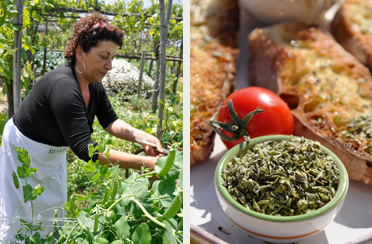
Our chefs know just how important it is to have fresh herbs and spices on hand to bring out the best in their seasonal foods. Now with summer over our shoulder and the gifts from the garden winding down, we're in full preparation for the winter months ahead. In Positano we're busy keeping the flavors of summer by naturally drying our organic garden herbs and chili peppers!

We naturally grow high quality basil (basilico), parsely (prezzemolo) marjoram (maggiorano), oregano (origano), rosemary (rosmarino), sage (salvia), thyme (timo) red chili peppers (peperoncini) which can all be dried either by air or oven.

Air-drying: Choose a dark, airy place. Attics and sheds are ideal, but a dark breezy room will work fine. Tie the stems of the chili peppers or a loose bunch of cut herbs with twine or thick string. Hang the branches upside down by the string. After a few weeks the leaves should be completely dry, rub them off the stems and store in clean, glass jars away from direct light.

Another alternative is to pick off the leaves and leave them to dry on clean, dry racks allowing air to circulate. Drying on racks is best for large-leaved herbs such as sweet basil or bay leaves.

Oven drying: Start by setting oven on low heat, 150° F or lower. On a metal rack or screen, layer fresh herbs and leave in oven for 20 - 30 minutes or until dry.

When herbs are crisp, remove the leaves from the stems and crumble them into clean, glass jars.

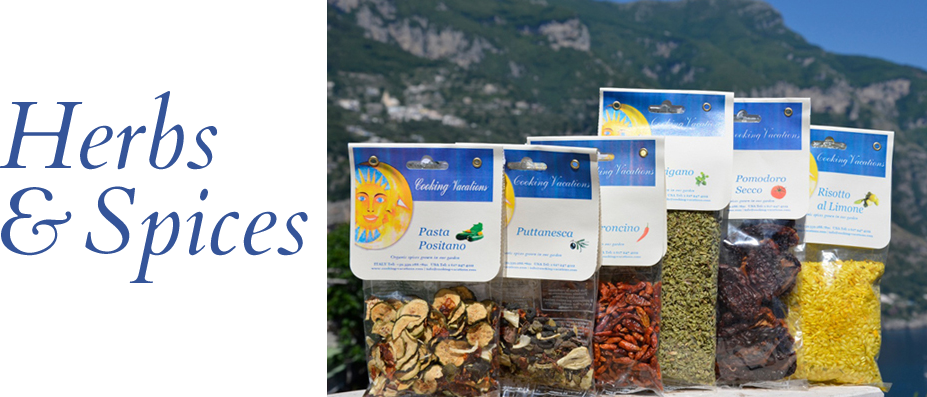
Or leave the harvest to us, and visit our Marketplace page, where a full line of spices and olive oils are available. The natural herbs and spices are simple to use, healthy, and compliment any pasta, sauce, soup, toasted bread, fish or meat recipe.

You still have time to sign-up and win Cooking Vacations Italian Kitchen basket giveaway that includes a complete Italian market filled with the perfecto foods for your home kitchen!!!

Thursday, September 27, 2012

Truffles - The Diamond Of The Kitchen

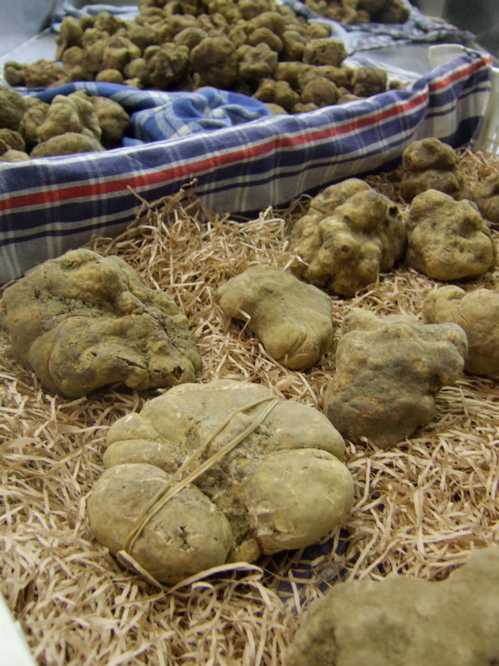
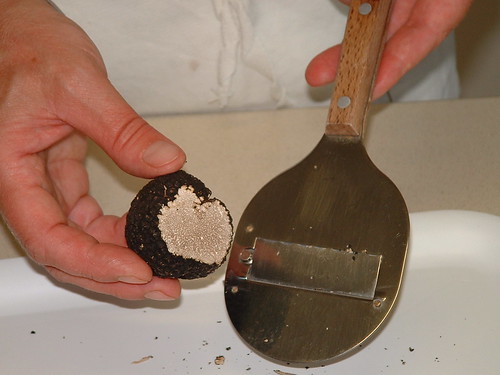
Precious truffles, coming in two varieties white, tartufi bianchi and the black, tartufi nero, are those ever so delicious tubers that improves any humble meal. The white truffle, the higher priced tuber, boast a bigger pungent flavor and scent. While black truffles are relatively subtle and earthy.                                   
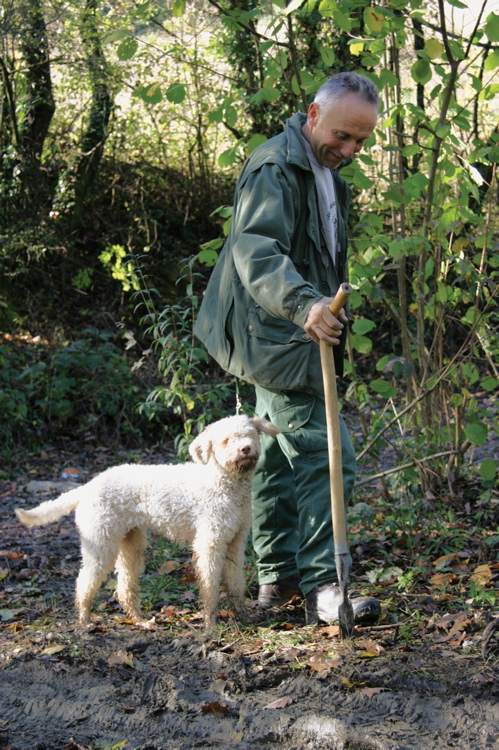
As we come into the season from October to March, the highly prized tubers are hunted down by dogs in Italy and pigs in France. Growing predominately in Tuscany, Emilia-Romagna, Abruzzo and in Piedmont, truffle experts say, the best and biggest are said to rest in the countryside near Alba, not  far from Turin. They grow near the roots of trees in forests, and are only detected by the trained nose of the truffle dog and guidance of his master, the trifulau or truffle hunter.
Truffles 6Truffles are almost always eaten raw, sliced very finely with a slicer or mandolin over risotto, cheese, or most egg dishes like a frittata. If you can get a black truffle, try lightly sautéing with a few slices in unsalted butter on very low heat for 2-3 minutes, then add tagliolini or tagarin into the pan and toss with Parmesan cheese.

Tips for handling
  • Fresh truffles need to be cleaned with a soft brush, never was with water!
  • Its best to consume them with a few day of being unearthed. They can be stored in the fridge in a small jar with eggs. The eggs take on the flavor of the truffles and later made into a light truffle souffle that keeps the wonderful earth flavor.
  • Truffles can be stored immersed in oil and frozen up to 3 months in a sealed, air-tight bag
Join our own truffle hunger, Alberto as he takes you through the forests near Bologna for an unforgettable truffle hunting adventure and cooking vacation!! 


Friday, September 21, 2012

Cooking into Autumn Flavors


Autumn is almost here and we have marked our calendars for the beautiful olive oil making season. And although the sleepy winters dim the lights and the sea waves roll on the shores in solitude, we are preparing for the next cycle - planting, turning the land and picking the fruits that will get us through winter. Join our kitchen and break some bread with us as we welcome the new season.

Try this creamy pumpkin-leek soup to get you in the autumn spirit!

Zucca Saltata ~ Slow Cooked Savory Pumpkin


2 lb Pumpkin, pealed and chopped into cubes
Garlic, chopped finely
Olive oil
Fresh red chili pepper
Fresh parsley, rinsed, dried and chopped


In a large non-stick pan, add olive oil, chopped garlic (be generous), and heat until the garlic is blond.  It will become almost creamy, but do not to brown it too much.  Remove from the heat a moment and add chili pepper and parsley, so the pan doesn’t flame up.  Put back onto the heat and add the zucca.  Stir or flip the zucca in the pan for about 5 minutes, then cover loosely and allow to cook over medium heat, stirring occasionally. 

Cook for about 20-30 minutes, testing to see when it is cooked by pressing your spoon on a cube of zucca.  It is done when the zucca gives when you press it.  When your zucca  is tender, spoon into a serving bowl and sprinkle with a bit of fresh parsley.  Serve hot. 

Variation:
You can serve this edible pumpkin as a side dish or you can boil pasta and use it as a sauce.  Toss your cooked pasta into a pan with the sauce and cook together for a moment.  Serve your pasta with zucca with a sprinkle of Parmesan cheese and fresh parsley.